



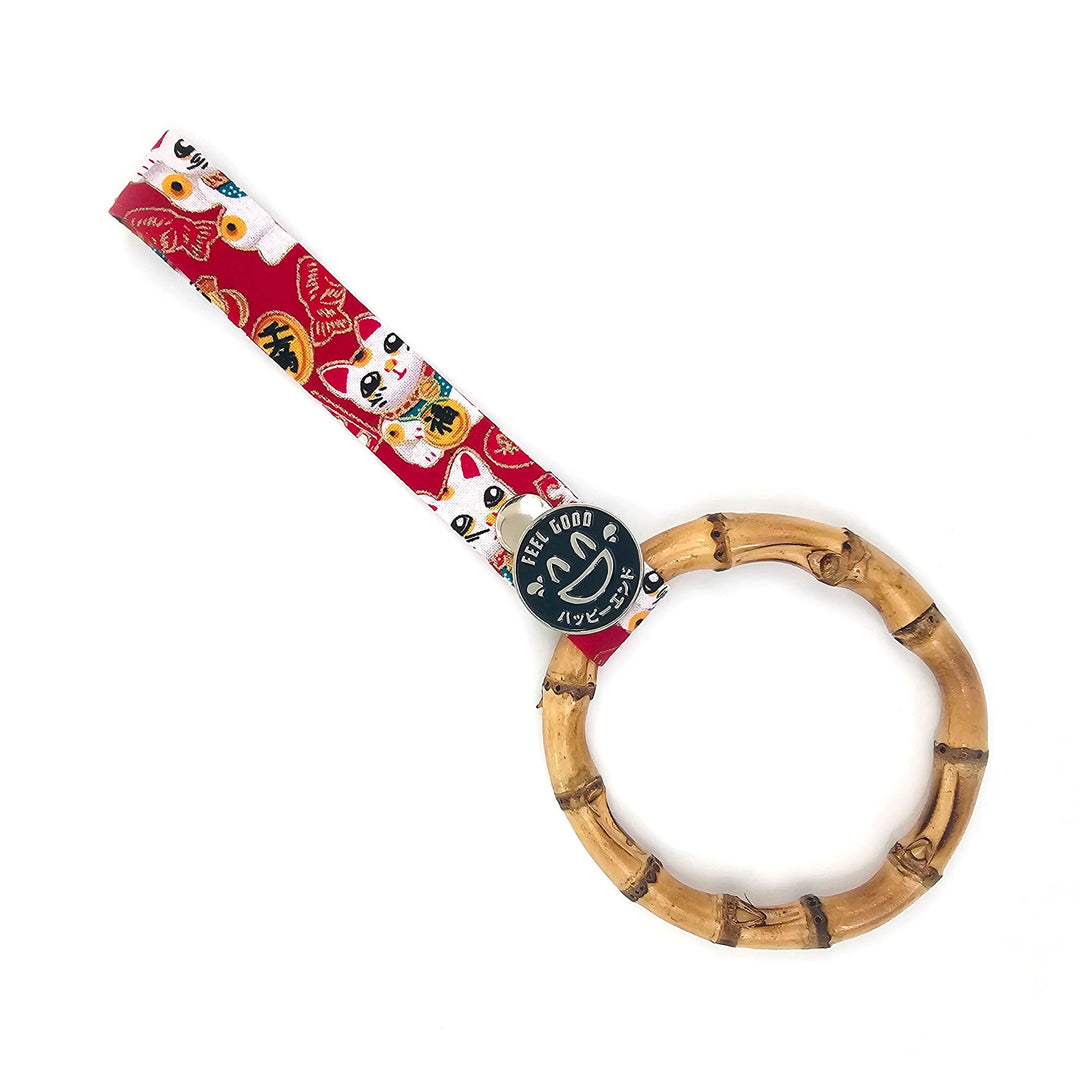


About Our Tsurikawa / Drift Charms
The tsurikawa started life as a train handle in Japan and became one of the most recognizable symbols in drift, bosozoku, and kaido racer culture. Hang one from your rear tow hook, bumper, or rearview mirror and carry a piece of that history with you.
What is a tsurikawa?
Tsurikawa (roughly "hanging strap") are the ring handles passengers hold on Japanese trains and buses. In the 1970s and 80s, street racers and bosozoku riders began taking them and hanging them from rear bumpers, a low-slung badge that said the car scraped close enough to touch the road. Decades later, the tsurikawa is a worldwide symbol of JDM street culture.
How people run them
Under the rear bumper is the classic look. Plenty of people also hang them from tow hooks, roll bars, headrests, or the rearview mirror. Anywhere it can swing, it works.
Rings, hearts, and stars
We stock the traditional ring alongside hearts and stars, with strap styles you will not find anywhere else, including glitter, glow-in-the-dark, and golden clouds. Whether you call them JDM rings, drift charms, or subway handles, there is a style that fits your build.
Tsurikawa FAQ
What does tsurikawa mean?
It is the Japanese word for the hanging straps on trains and buses. "Tsuri" comes from hanging, "kawa" from the leather straps originally used.
Why do people hang them from bumpers?
It started with Japanese street culture in the 70s and 80s. A tsurikawa dragging low was proof the car sat close to the ground. Today it is a nod to that history.
Can I run one outside in the weather?
Yes. Our straps and rings are made for exterior use. Sun and rain will age any material eventually, so rotate colors if you want it looking fresh.